

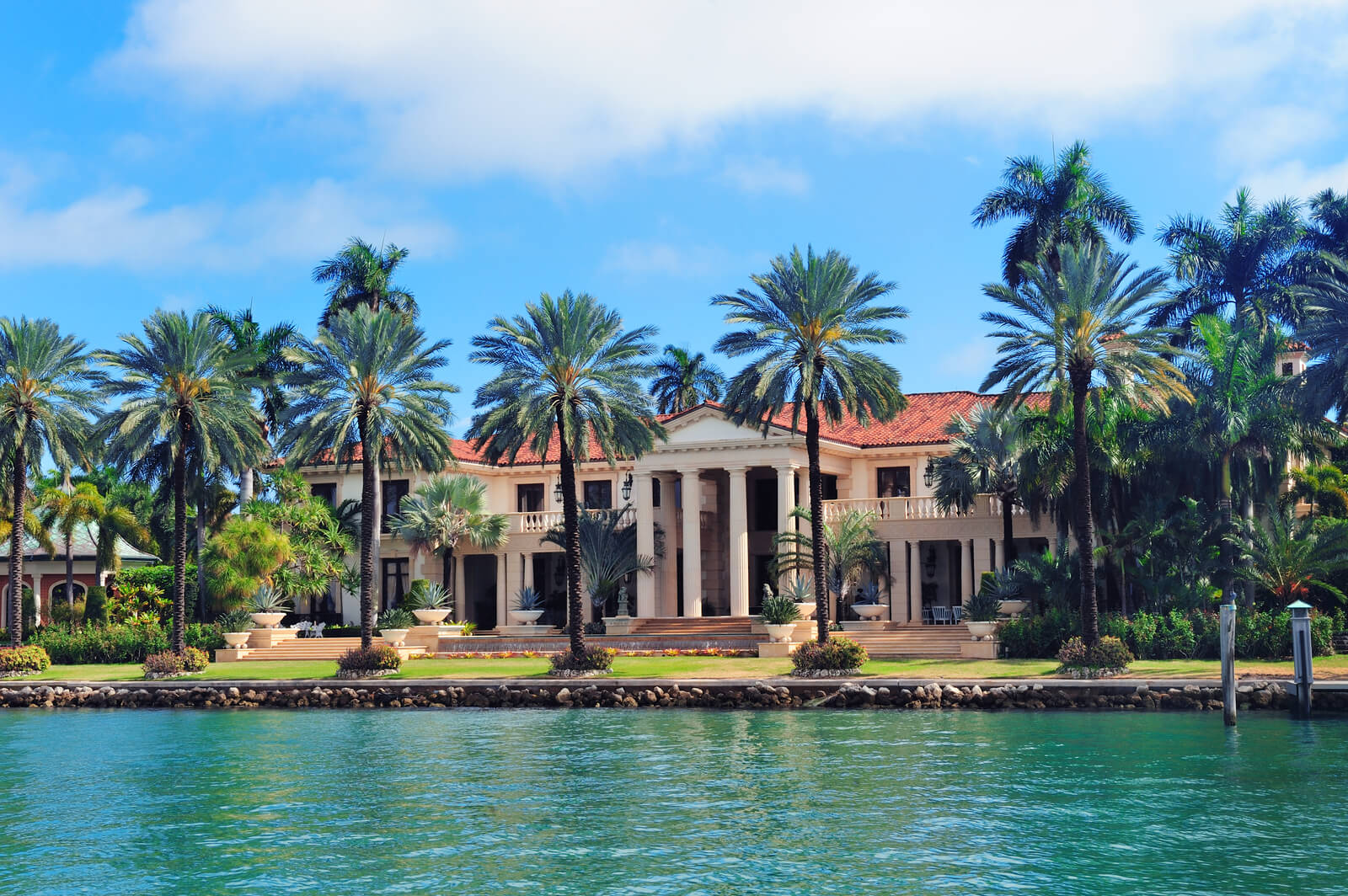
Florida’s ultra-luxury real estate market is posting numbers that are hard to ignore. Miami-Dade recorded a 21% increase in $1 million-plus home sales in January 2026 compared to the same month a year earlier, according to the Miami Association of Realtors. Broward County was not far behind at 14%. South Florida ended 2025 as the top ultra-luxury market in the country, with 361 sales of homes priced at $10 million or above, the second-highest total on record.
Behind that momentum, a growing share of high-end transactions are moving away from traditional listings and toward luxury home auctions. For sellers seeking a date-certain close, buyers looking to acquire a property at true market value, and brokers wanting to expand their toolkit, the auction model deserves a serious look. This guide covers how luxury home auctions in Florida work, what each party can expect, and how to approach the process with confidence.
What Is a Luxury Home Auction in Florida?
A luxury home auction is not a foreclosure sale or a distress event. Properties entering this market are high-end homes typically priced at $1 million and above, offered by motivated sellers who want a transparent, competitive, and time-bound transaction. The process brings pre-qualified buyers together around a set auction date, with bidding either online, in person, or through a hybrid format.
Three auction formats are common in the Florida market:
Absolute auctions proceed with no minimum bid. The property sells to the highest bidder, regardless of the final price. This format attracts the most competition and typically generates the strongest interest from qualified buyers.
Reserve auctions give the seller the right to accept or decline the highest bid. A confidential reserve price is set in advance, and the seller is not obligated to sell if bidding falls below that threshold.
Minimum bid auctions set a published floor price. Bidding opens at that number, which signals market expectations to prospective buyers and reduces uncertainty for all parties.
Understanding which format applies to a specific listing is one of the first questions any serious buyer or seller should ask. More details on how each format operates are available at Platinum Luxury Auctions’ guide to how luxury real estate auctions work.
Why Florida Has Become a Premier Market for Luxury Auctions
Florida’s combination of no state income tax, international appeal, and a relentless influx of high-net-worth residents has created ideal conditions for luxury auction activity. The state added over 30,000 millionaire households in the past two years alone, according to recent migration data.
Coastal corridors, particularly Palm Beach, Miami Beach, and Naples, have seen auction results push into eight-figure territory with regularity. High-profile buyers, including technology executives, have made nine-figure acquisitions in neighborhoods like Coconut Grove and Indian Creek Village, a level of activity that filters down and raises valuation benchmarks across the broader market.
The cash-heavy nature of the Florida luxury market also aligns well with the auction model. The Miami metropolitan area led the nation in all-cash home purchases, with nearly 43% of Miami transactions in early 2025 completed without financing, according to the Miami Association of Realtors. Cash buyers can close quickly, a structural advantage that fits precisely with the 60-day closing timeline that most luxury auction houses target.
Southwest Florida has emerged alongside South Florida as a serious auction venue. Naples and Sarasota attract buyers from the northeast and Midwest seeking privacy, walkability to the water, and properties with architectural distinction. Central Florida’s lake district communities and the Florida Panhandle’s Gulf-front estates are also seeing increased auction interest as inventory in coastal metros tightens.
For Sellers: What to Expect from a Florida Luxury Auction
The core appeal for a seller is control over timing. A traditional listing can sit on the market for months with no guaranteed outcome. A luxury auction sets a specific date and concentrates buyer interest around that event. The marketing period typically runs three to four weeks before the auction date, during which the property is promoted through targeted digital campaigns, luxury print publications, email outreach to pre-qualified buyer lists, and PR placement in relevant media.
That marketing effort is not generic. Reputable luxury auction firms reach international audiences. Buyers in Europe, Latin America, the Middle East, and Asia are active participants in Florida’s high-end market, and the best auction houses have the relationships and infrastructure to reach them. A traditional broker typically cannot replicate that reach within the same compressed timeframe.
Sellers should also understand the cost structure. Auction houses generally charge a buyer’s premium, an additional percentage, often in the range of 5% to 12%, paid by the winning bidder on top of the final bid. Some firms charge sellers a marketing fee or listing commission in addition. Before signing with any auction house, sellers should request a full breakdown of all fees and understand how the buyer’s premium is structured, as it affects the net price a seller receives.
Properties that have sat on the market and failed to attract offers through traditional channels are strong auction candidates, but so are properties that have never been listed. Some sellers prefer the auction format precisely because it creates competition without the uncertainty of an open-ended listing period.
For Buyers: How to Participate in a Florida Luxury Auction
Registration is a prerequisite. Serious auction houses require buyers to verify their financial capacity before the auction date. For Florida luxury properties, this typically means submitting proof of funds or a letter from a financial institution confirming the ability to purchase. Registration deposits in the $100,000 to $250,000 range are common for high-value properties and are applied toward the purchase price if the buyer wins.
Due diligence happens before bidding, not after. Unlike a traditional purchase where inspections and contingencies follow the accepted offer, auction buyers are expected to review all available property documentation, conduct independent inspections, and make any necessary inquiries before raising a bid. Auction firms typically make title documents, inspection reports, and property history available in a secure data room during the pre-auction period.
For Florida properties specifically, buyers should evaluate flood zone classification, hurricane impact ratings on windows and roofing systems, and current insurance availability. Florida’s property insurance market has shifted considerably in recent years, and premiums on coastal homes can be substantial. Understanding the full carrying cost before bidding is essential.
The buyer’s premium adds to the total purchase cost. If the winning bid is $3 million and the buyer’s premium is 10%, the contract price is $3.3 million. That figure should be factored into every bidding calculation. Closing timelines are typically 30 to 60 calendar days from the auction date. Most auction purchases are not subject to financing contingencies, which means buyers who need a mortgage should secure pre-approval and coordinate with their lender well in advance of the auction.
Explore current listings and upcoming Florida auction events on the luxury auctions calendar.
For Brokers: How Luxury Auctions Create New Revenue Opportunities
The broker’s role in a luxury auction is not eliminated; it’s formalized. Most reputable auction firms work with buyer’s brokers, paying a commission when a registered client represented by a broker wins an auction. Brokers who have clients interested in high-end Florida properties have an opportunity to introduce the auction channel as an alternative path to acquisition.
On the seller side, brokers whose listings have stalled can propose an auction as a reset strategy. An auction creates a defined endpoint and fresh marketing momentum for a property that may have experienced listing fatigue. A broker who brings a viable property to an auction firm often participates in the transaction on both sides.
Understanding the mechanics of what a luxury auction is and how it differs from a traditional listing empowers brokers to have more informed conversations with clients who may not have considered this path.
Florida Regions with the Most Luxury Auction Activity
Miami and Miami Beach
These areas remain the highest-volume markets, driven by international buyer concentration, oceanfront inventory, and trophy property demand. Recent acquisitions by prominent technology executives illustrate the scale of capital active in this market, with individual transactions reaching nine figures in neighborhoods like Coconut Grove and Indian Creek Village.
Palm Beach and Palm Beach County
Palm Beach consistently produces auction results in the eight-figure range. The combination of historic estates, strict architectural codes, and ultra-high-net-worth buyer concentration makes this market well-suited to the auction format. Oceanfront estates here regularly achieve results exceeding $30 million at auction.
Naples and Sarasota
Southwest Florida attracts buyers from outside the state seeking privacy, Gulf-front access, and communities with strong walkable amenities. Auction activity in this region has grown steadily alongside population inflows from high-tax states in the northeast and Midwest.
The Florida Panhandle
Destin, Seaside, and Alys Beach represent an emerging luxury auction market. Gulf-front properties in these communities carry architectural distinction and lifestyle credentials that translate well to competitive bidding environments, and buyer interest from outside Florida has grown considerably in recent years.
Frequently Asked Questions
What types of homes sell at luxury auctions in Florida?
Most luxury auction firms in Florida specialize in properties priced at $1 million and above. Eligible properties include oceanfront estates, golf community homes, historic mansions, lakefront retreats, and architecturally significant residences. Commercial real estate is handled through separate channels.
Can a buyer finance a property purchased at auction in Florida?
Most luxury auction purchases are cash transactions. Financing contingencies are generally not permitted, meaning buyers who need a mortgage must secure full pre-approval before bidding and coordinate closing with their lender within the required timeframe, typically 30 to 60 days.
What happens if the reserve price is not met?
In a reserve auction, if bidding does not reach the seller’s confidential minimum, the seller has the right to decline the highest bid. The auction house may then facilitate direct negotiations between the buyer and seller, though the transaction is not guaranteed.
How long does the entire process take?
From the decision to auction to the closing of a completed sale, the process typically spans eight to twelve weeks. The pre-auction marketing period runs three to four weeks, and closing follows within 30 to 60 days of the auction date.
Do brokers earn a commission in a luxury auction?
Yes. Most reputable luxury auction firms in Florida pay cooperating commissions to buyer’s brokers whose registered clients win an auction. Sellers working with a listing broker should confirm commission structure before signing an auction agreement.
The Bottom Line on Florida Luxury Home Auctions
Florida’s luxury real estate market is showing sustained strength in 2026, and the auction model has become a credible and increasingly preferred method for buying and selling high-end properties across the state. For sellers, it offers speed and global reach. For buyers, it provides access to exclusive properties with transparent pricing. For brokers, it opens a new revenue channel worth building expertise around.
Platinum Luxury Auctions has been serving buyers, sellers, and brokers across Florida and beyond since 2011. To learn more about upcoming Florida auction listings or to discuss whether the auction format is right for a specific property, reach out directly through the contact page.


